
The Angry Summer education resource

The Angry Summer is a creative project inspired by Idris Davies’ poems about the 1926 miners’ strike, bringing to life Welsh history through poetry, puppetry and new compositions.

Allow Youtube content?

This content is provided by Youtube. We need to ask for permission before viewing as they may be using cookies and other technologies to collect and process your personal data. For more information, please read their privacy policy , cookie policy. To view please accept below.

Poetry recordings

Welsh history brought to life

A creative team of students and graduates from Royal Welsh College of Music & Drama worked across design, composition and performance to devise a puppetry performance that takes the audience through the summer months of the 1926 Miner’s Strike.

The project combines historical research with creative interpretation, using puppetry to explore the political and social history of the 1926 strike, as well as the personal experiences and responses of the communities affected by it. It also encourages audiences to consider more recent examples of industrial action, such as the 1980s miners’ strike, and the role of collective action in society today.

‘The Angry Summer film made by students at the Royal Welsh College celebrates the work of the poet Idris Davies and marks the memory of the 1926 General Strike. I hope that the film is widely shown. It is a superb evocation of the soul of the poem, the spirit of the Strike, and a tragic and heroic time in our history. It also manifests the multiple talents of the young people who conceived, developed and produced the result.’
The Rt Hon. Lord Neil Kinnock
‘History, especially working-class history, can slip through the cracks of generational memory if it is not reimagined through art. Idris Davies’ The Angry Summer recaptured the General Strike and Miners’ Lock Out of 1926 in a poetic drama that still animates our culture. Now RWCMD students have brilliantly reimagined this epic as puppet theatre, connecting words, music and character to build an educational bridge to a history of struggle and survival. Their work demonstrates the continuing power of Davies’ writing and the ability of art to bring the past to life.’
Professor Dai Smith CBE

Behind the scenes

About the education resource

This education pack gives students and teachers an insight into The Angry Summer project and its creative process.

The pack includes a film of the puppetry performance, combining recorded performances of Idris Davies’ poetry with original music and soundscapes. The film is interspersed with interviews with the creative team, exploring their process, the importance of creative work like this and the wider aims of the project.

The resources are aimed at GCSE students studying Art and Design, Drama, English Literature, Politics and History, and encourage students to explore how creative practice can help us understand and interpret the past.
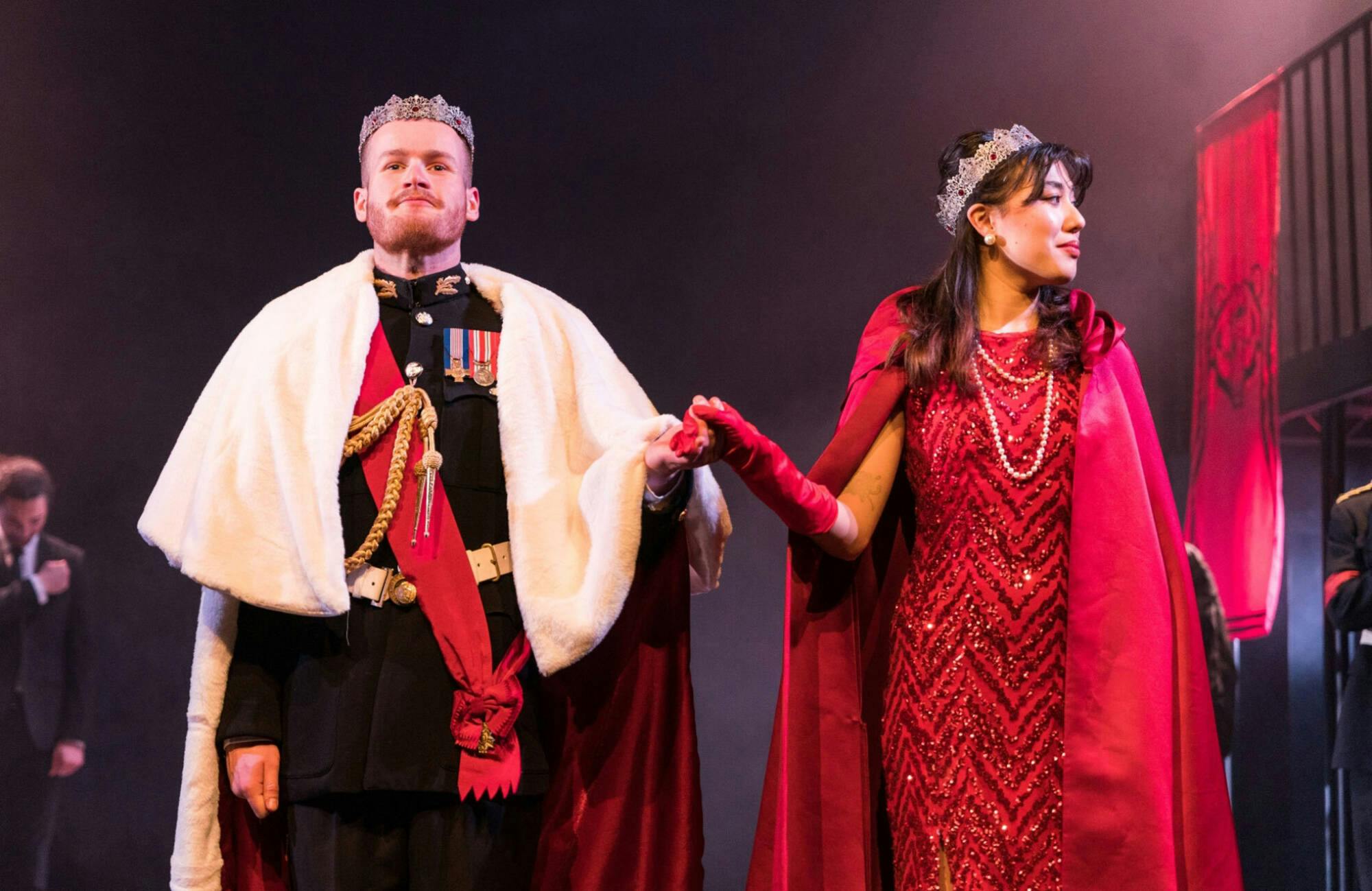
‘The pack has inspired me to take the tasks into our own filmmaking and animation projects. The pack works brilliantly across many subject areas outside the arts, facilitating a creative response to a range of topics. There is an opportunity to bring a range of social and historical topics to life in the classroom.’
Darren LathamArt Teacher, Pen Y Dre High School
‘I really like the pack: the poems are inspiring and encourage links between poetry and design. I think it links really well to our Welsh heritage and gives pupils an insight into our past.’
Jennie GoughArt Teacher, Cardinal Newman School and WJEC GCSE Team Leader
‘This would provide valuable stimulus for free composition coursework at GCSE and A-level, while giving students the independence to develop their own creative projects.’
Benjamin WilkinsonMusic Teacher and Head of Hardwick House at Wellington School, Somerset
‘The content is good for “stretch and challenge” - which is something we’re all seeking to provide learners with to extend their understanding and deepen thinking.’
Vivienne GoodmanDrama and Theatre Studies, Coleg Gwent

Explore section