Foundation Degree in Scenic Construction
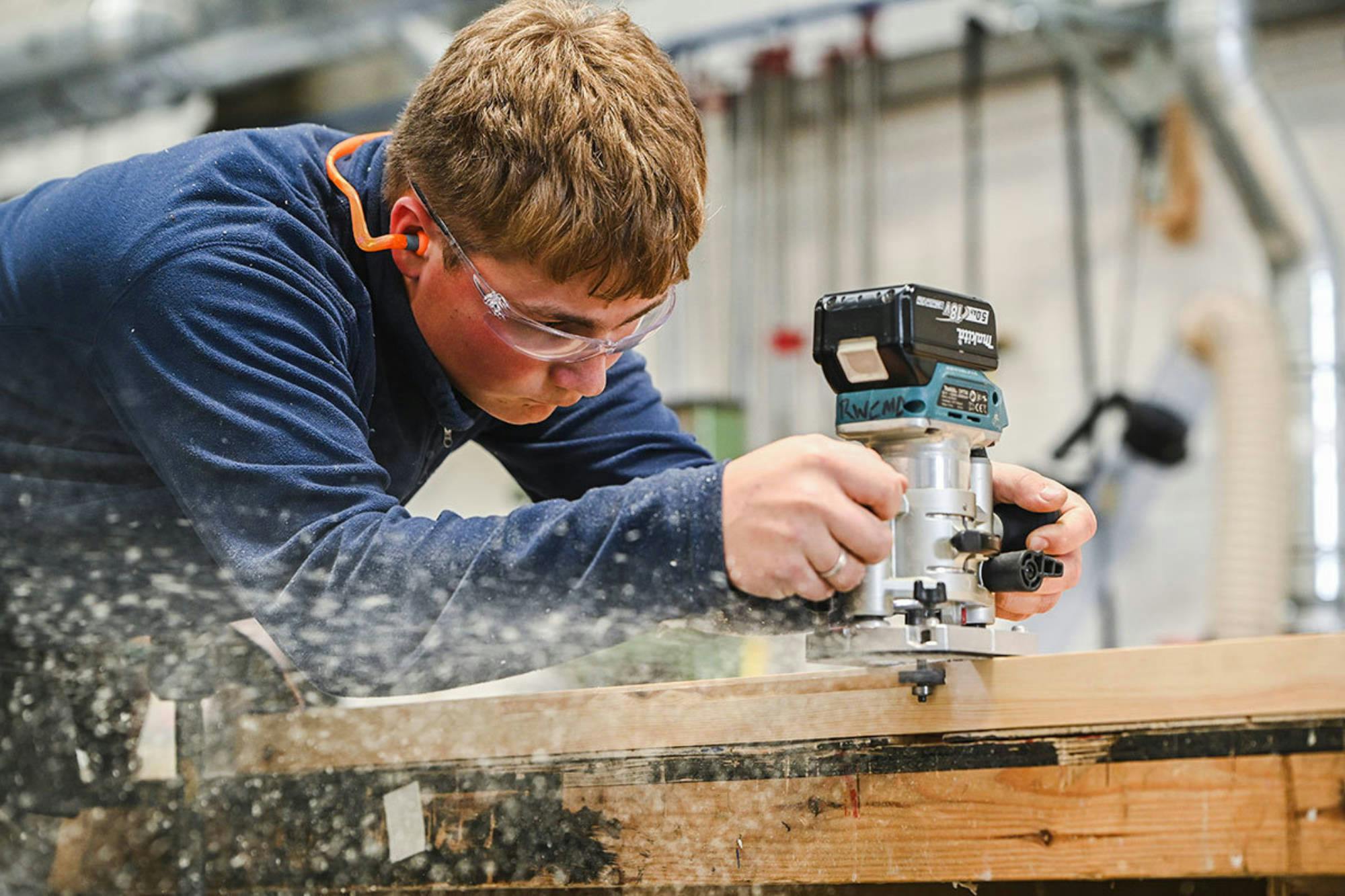
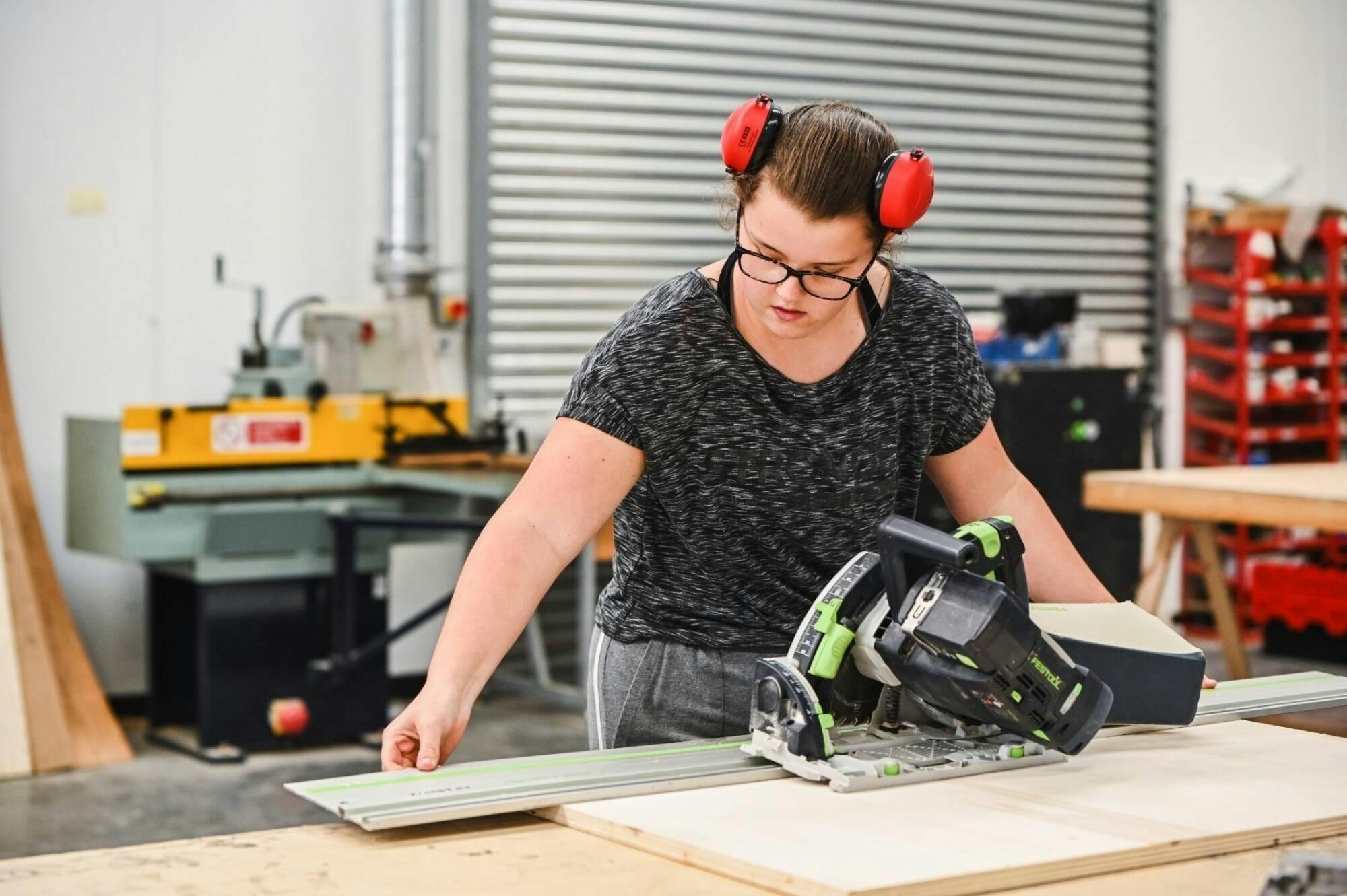
Through work experience and hands-on training, you’ll learn how to plan, draught, construct and install sets to a professional standard whilst working on our numerous public productions.
Find out more

For many young people, creative careers can feel distant or unclear - especially if academic study is not the right fit for them. Royal Welsh College of Music & Drama’s Foundation degrees in Scenic Construction and Scenic Arts offer a practical, hands-on route into backstage roles across theatre, film and TV.
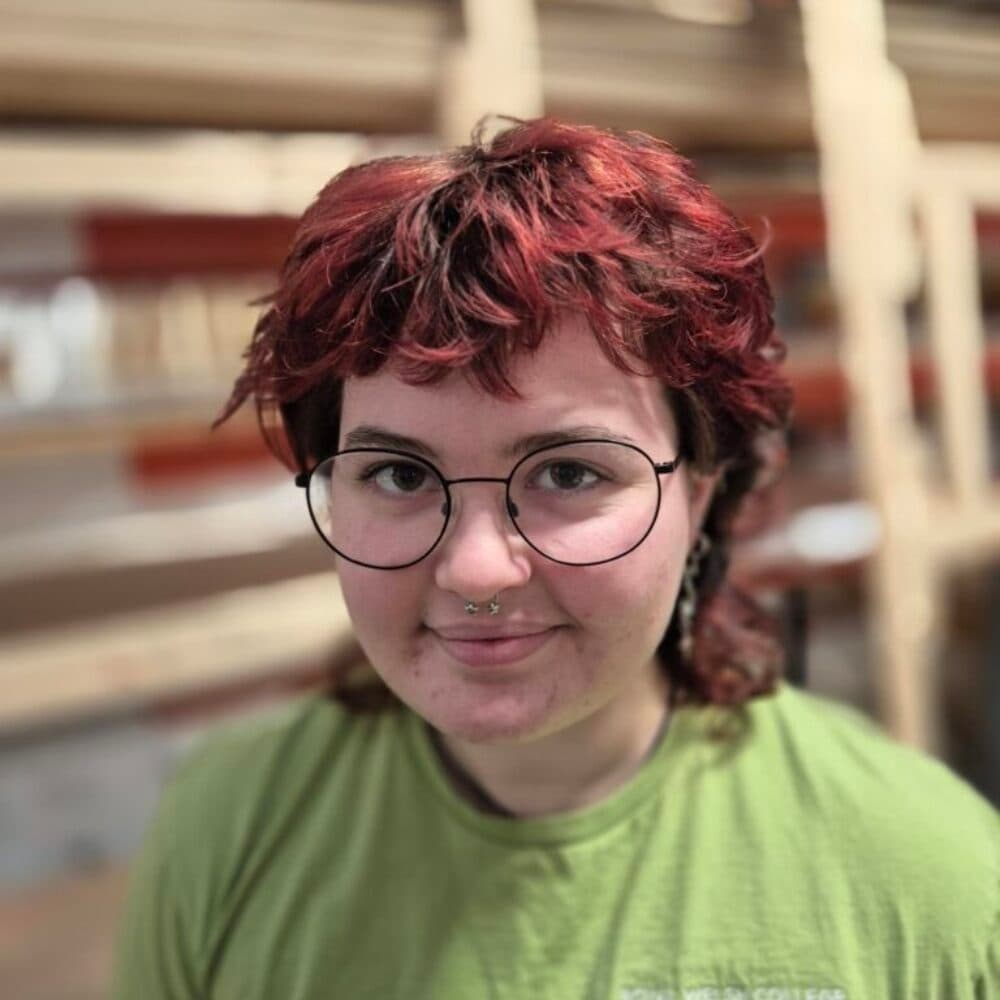
Student Bea Massey recently invited pupils and teaching staff from her former school, Radyr Comprehensive, to take part in hands-on workshops at RWCMD’s Llanishen campus. Having studied on the Foundation Degree in Scenic Construction herself, Bea wanted to give students a behind-the-scenes look at creative careers they might not otherwise encounter.
In this interview with RWCMD’s Communities Engagement Partner Guy O’Donnell, Bea talks about her journey into scenic construction, why hands-on learning matters, and what she hopes young people take away from visiting RWCMD’s workshops.
I’ve always loved theatre. From a young age, my mum and I went to see plays, ballets, operas and musicals whenever we could. That led me to take drama at GCSE, but I never really liked being on stage. I was far more interested in what was happening behind the scenes.
At my first high school, I joined the drama club as a stagehand, and for the practical element of my drama GCSE I chose to do lighting instead of acting. I was one of the only students at Radyr to do this, but the teachers supported me and encouraged me to explore it further.
'When I started thinking about university, I knew I didn’t want an academically centred course. I wanted something practical where I could work with my hands.'Bea MasseyStudent
I briefly considered an apprenticeship with the construction company my dad worked for, but then Screen Alliance Wales (SAW) came into school to talk about careers in film, TV and theatre. Hearing about the range of roles available really appealed to me.
I began researching courses in theatre lighting and found an RWCMD Open Day for Stage Management and Scenic Construction. I went and immediatelyfell in love with the vibe of the College. Seeing the theatre spaces and sets was exciting, but when I visited the Llanishen workshops, I knew I had to get onto the Scenic Construction course.
After leaving sixth form at Radyr Comprehensive School, I went straight into the Foundation Degree in Scenic Construction at the Royal Welsh College of Music & Drama. I completed that two-year course last summer and am now doing the optional third year to progress onto the BA (Hons) Design for Performance degree.
It started as a way to involve Radyr students in building the set for their production of 'Footloose', and to give them a better understanding of what goes into set building and scenic painting. The College workshop already has a relationship with the school’s drama department, so this felt like a great way to develop that further.
I also wanted to give young people the same kind of eye-opening experience that Screen Alliance Wales gave me. A lot of students aren’t aware of what career options there might be behind the scenes, or that these paths are open to them.
I wish I’d known earlier that scenic courses and backstage careers like this even existed. In school, theatre and the arts are often presented as being mainly about acting and performance. Opportunities to learn about production roles aren’t as common, which makes it harde to imagine them as real career options.
I was lucky at Radyr that I was allowed to focus on lighting for my drama GCSE, which eventually led me to my course in scenic construction. But it was a difficult path to get to this point. If I had known about stage management and scenery making sooner, I might have arrived here earlier with more experience under my belt.
Walking into the Llanishen workshop really is breathtaking. For me, it completely confirmed my decision to study the Foundation Degree in Scenic Construction at RWCMD.
Seeing the work of previous students on display is incredibly inspiring. It makes you realise that one day you could be making sets and props at that level, for productions such as ‘Doctor Who’ or ‘His Dark Materials’.
'I knew immediately that I wanted to learn in that environment and eventually work in spaces like it.'Bea MasseyStudent
The Foundation Degree in Scenic Construction and the Foundation Degree in Scenic Arts are both almost entirely hands-on, which makes them ideal for kinaesthetic learners, who learn by doing. You tend to pick up skills quickly because you are constantly practising them.
'A key moment that really changes your view of the craft is the first time you work on a production block, where you help build sets for College shows. That’s when you really understand the pace of a professional workshop and the level of speed and quality expected in the industry.'Bea Massey
I think society puts a lot of pressure on young people to aim for so-called ‘real jobs’. In reality, any paid work is a real job. If your work excites you and you are paid your worth, then your job has value.
Creative work does not always come with guaranteed security, and freelance life can be challenging. That’s something I’ve had to accept. But at RWCMD we are taught about finance, freelancing, applying for grants and preparing for life after graduation. That support makes a big difference.
'I’d recommend going to as many Open Days as possible and learning about the different backstage roles available. It really helps to see the spaces and talk to people already working or training in those areas.'Bea Massey
I’d also suggest exploring the Screen Alliance Wales website, where they offer tours, short courses and shadowing opportunities across film, TV and theatre. That can be a great first step into the industry.
Our two-year foundation degrees in scenic arts, set construction and technical production are designed in collaboration with the industry to get you hands-on, industry-focused training for a creative career in theatre, TV, film and live events.


